Our Blog: May 1, 2026
- 855.471.2589
- Schedule a Tour
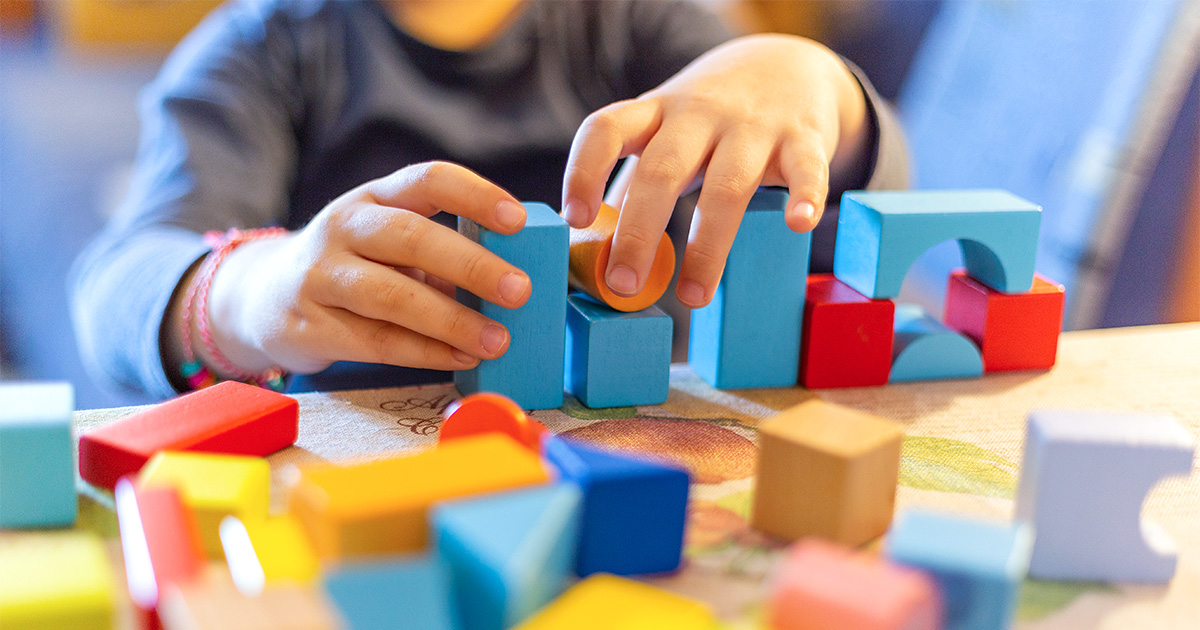 Learning often reveals itself in the smallest, most meaningful moments. In our Montessori classrooms, children naturally explore structure and function as part of their daily, self-directed work. This big idea helps children understand how things are built, why they work the way they do, and how they serve a purpose in the world.
At first glance, structure and function may seem simple. Yet when a child notices how an object is shaped and what it is designed to do, they are engaging in deep, purposeful thinking. They’re observing, experimenting, and making connections. These processes support scientific reasoning, problem-solving, and independence.
Why this concept matters
Maria Montessori observed that children are born investigators who are driven by curiosity and a desire to understand their environment. When children explore structure and function, they begin to ask meaningful questions, such as:
- Why does a spoon work better than a fork for soup?
- How does a bridge stay so strong?
- Why do some toys roll, stack, or fit together, and others don’t?
- How do animal bodies help them move, eat, or stay safe?
Through these discoveries, children move beyond naming objects to understanding how and why things work. This kind of thinking lays a strong foundation for scientific understanding, logical reasoning, and confidence as capable problem-solvers.
How this learning comes to life in a Montessori classroom
In our Montessori classrooms, learning unfolds through intentional materials, thoughtful observation, and hands-on exploration. Concepts like structure and function emerge organically as children work with materials designed to isolate specific properties such as size, shape, weight, and purpose. In our classrooms, you might see children:
- Building and rebuilding towers to discover which structures are stable and which fall
- Exploring materials that are soft, hard, flexible, or rigid and noticing how those qualities affect their use
- Using real tools with purpose, such as scissors to cut, scoops to transfer, or ramps to test motion
- Observing nature and asking thoughtful questions: Why do birds have wings? Why do plants grow upward?
- Modifying their work and wondering, “What happens if I change this?”
Montessori guides support this learning by carefully preparing the environment, observing each child, and offering language or gentle prompts that invite deeper thinking. Rather than giving answers, they encourage children to slow down, observe closely, and draw their own conclusions.
How this understanding grows with your child
At Montessori Unlimited, learning is seen as a continuous progression. The exploration of structure and function begins with concrete experiences in early childhood and grows alongside the child over time.
As children mature, they begin to recognize that structure and function are interconnected everywhere, from the human body to buildings, machines, and systems in nature. They are not memorizing isolated facts; they are learning how to think, reason, and problem-solve independently.
How families can support this learning at home
You don’t need special materials to explore structure and function at home. These discoveries naturally occur during everyday routines. Try these simple observations and conversations:
- In the kitchen: “Why do we use a whisk instead of a spoon?” or “Why does soup go in a bowl and not on a plate?”
- During play: Build with blocks, boxes, or pillows and test what makes a structure steady or wobbly
- Outside: Observe playground equipment and wonder aloud, “Why is this shaped this way?”
- At bath time: Notice which toys float and which sink, and invite your child to think about why
- Getting dressed: “Why do shoes have soles?” or “Why do coats have zippers or buttons?”
- Problem-solving together: “This isn’t working. What could we change?”
These everyday moments help children connect what they see with how things function, strengthening curiosity, independence, and confidence.
The big takeaway
When children explore structure and function, they’re not just learning about objects; they’re learning how the world works. They are testing ideas, solving problems, and asking increasingly thoughtful questions. Whether at school or at home, those everyday moments of discovery are building skills that will last far beyond the classroom. Across our community of Montessori Unlimited schools, these moments happen every day through play, exploration, and the guidance of caring teachers who help children grow and inspire a lifelong Love to Learn.
Additional parent resources
If you’d like to explore this concept further, these trusted early education resources offer simple, research-based ideas:
National Association for the Education of Young Children (NAEYC):
www.naeyc.org/resources/topics/stem
Harvard Center on the Developing Child:
www.developingchild.harvard.edu
PBS Parents - STEM at Home:
www.pbs.org/parents/learn-grow
About the Author
Nelle Brien, M.Ed.

With more than 25 years of experience, Nelle Brien is the Director of Education Operations and Integration at Learning Care Group (LCG). She leads a team that manages all classroom materials for new schools and the company's enrichment programs. Nelle also collaborates with various LCG teams to strengthen family engagement, expand teacher training, and drive student success across our community of 1,110+ schools. She’s passionate about providing an engaging learning environment, supporting families, and empowering educators. Nelle is currently pursuing doctoral studies in Early Childhood Education. An avid competitive duplicate bridge player, she is also a proud wife, mother of five, and grandmother of two.
