Our Blog: April 3, 2026
- 855.471.2589
- Schedule a Tour
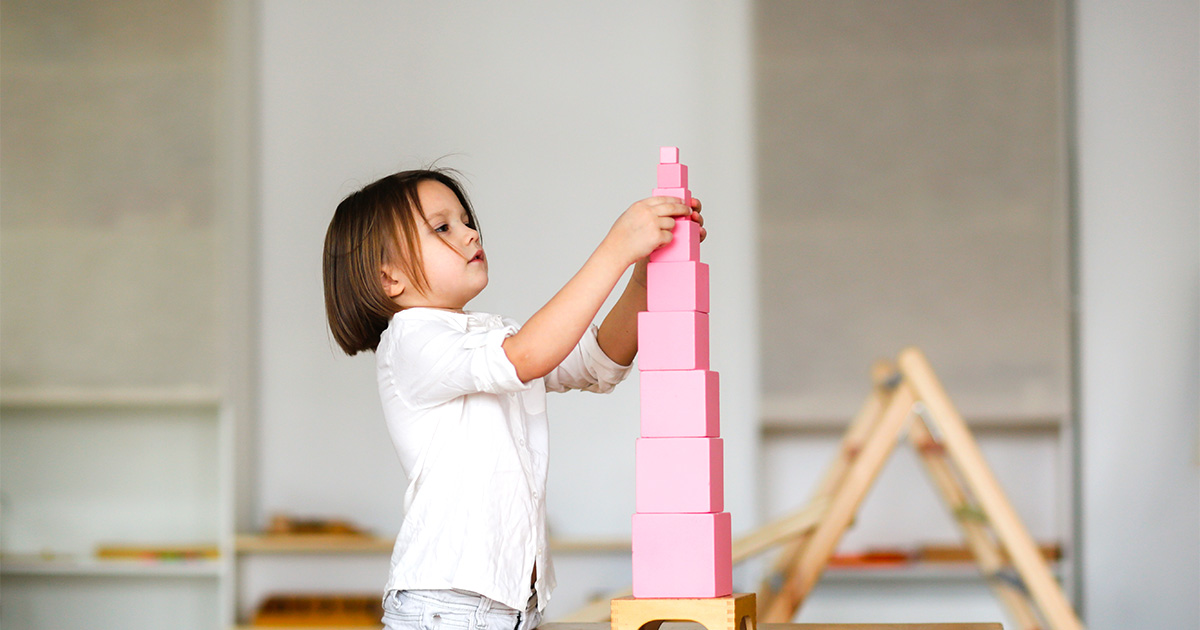
Learning shows up in the smallest, most meaningful moments. In our classrooms, children are exploring patterns by noticing what repeats and what comes next.
Patterns are all around us. From the rhythm of a daily routine to the stripes on a shirt or the beat of a favorite song, children are naturally drawn to repetition. This simple idea invites them to look closely, make connections, and begin predicting what comes next in a sequence. While this may seem simple, recognizing patterns is powerful work. Doing so helps children build early math skills, strengthen memory, and learn how to think in new ways.
Why patterns matter
Children are natural observers. Recognizing patterns helps them bring order to what they see, make predictions, and grow confidence in their thinking. As children explore patterns, they begin to:
- Notice repetition and sequences
- Predict what comes next
- Strengthen early math and reasoning skills
- Build confidence as problem-solvers
These early experiences lay the foundation for learning across multiple subjects, including math, reading, and writing.
How patterns come to life in a Montessori classroom
In a Montessori classroom, patterns are discovered through purposeful work, repetition, and hands-on exploration within a carefully prepared environment. Rather than being introduced as a single lesson, patterns are woven throughout the materials and daily routines. Children are given time to repeat, refine, and make discoveries independently. At school, you might see children:
- Creating sequences with bead chains or color patterns with bead bars
- Exploring order and progression through materials like the Pink Tower and Brown Stair
- Arranging and comparing shapes with the Knobbed Cylinders
- Exploring sound patterns through language work, including rhyming and beginning sounds
- Noticing patterns in the daily flow of the classroom (work time, clean-up, and transitions)
You might hear a child pause during their work and say, “It goes like this… and then this comes next.” In that moment, they are not just repeating a sequence; they are making sense of order and building understanding through experience.
Over time, you may notice your child beginning to recognize patterns beyond the classroom and pointing them out in books, music, or everyday routines. These small observations are a sign of growing concentration, confidence, and independence. Teachers and Montessori Guides observe closely and offer gentle guidance when needed, allowing children the space to make discoveries on their own.
What this means for your child
When children explore patterns, they’re not just noticing what repeats; they’re learning how to think, predict, and make sense of the world around them. In a Montessori environment, these discoveries happen through the exploration of hands-on materials, repetition, and independent work.
And those “I know what comes next!” moments? They’re worth celebrating because they reflect growing concentration, confidence, and a lifelong Love to Learn.
Additional Resources:
If you are interested in how children develop pattern recognition and early thinking skills, these resources offer helpful insight:
- Maria Montessori https://montessori-ami.org/resource-library
- National Association for the Education of Young Children https://www.naeyc.org/resources/topics/math
About the Author
Nelle Brien, M.Ed.

With more than 25 years of experience, Nelle Brien is the Director of Education Operations and Integration at Learning Care Group (LCG). She leads a team that manages all classroom materials for new schools and the company's enrichment programs. Nelle also collaborates with various LCG teams to strengthen family engagement, expand teacher training, and drive student success across our community of 1,110+ schools. She’s passionate about providing an engaging learning environment, supporting families, and empowering educators. Nelle is currently pursuing doctoral studies in Early Childhood Education. An avid competitive duplicate bridge player, she is also a proud wife, mother of five, and grandmother of two.